

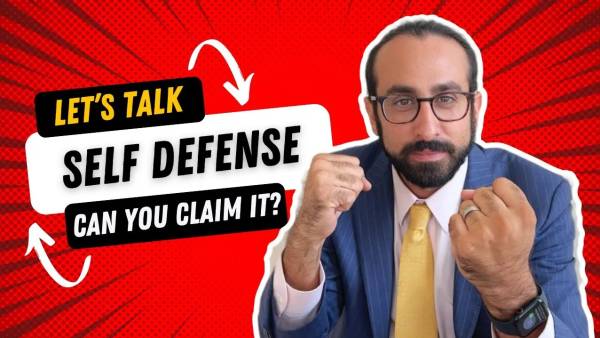
If you are reading this, you may already be asking yourself one of the hardest questions people face after a violent encounter. Did I act in self-defense, and will the law agree with me?
Every week at Phillips Law, someone comes to us terrified because a moment that felt like survival has now turned into a criminal charge. They did what they believed they had to do to protect themselves or someone they cared about, but now the police see only a one-sided story. I talk about this a lot on our YouTube channel because your right to defend yourself matters. And knowing the rules before you are ever in that situation can make all the difference.
Today I want to break down the three questions that help determine whether you have a valid self-defense claim in Louisiana. These same concepts apply whether you are facing a simple battery charge, an aggravated assault, a gun related allegation, or something even more serious.
And if you or someone you know has already been charged, you can call us at 504-434-7000 for a free consultation, or visit our Criminal Defense page to learn how we may be able to help.
Let’s get into it.
What Louisiana Law Says About Self-Defense
Louisiana law allows you to use reasonable force to protect yourself or someone else when you are facing an immediate threat of harm. The key word there is reasonable. The law is not asking whether you were scared. It is asking whether the average person would have believed force was necessary in that moment.
If you are claiming self-defense, three questions matter more than anything else.
- Was there an immediate threat
- Would a reasonable person believe danger was present
- Did your response match the level of the threat
If the answer to these lines up with what the law expects, you may have a valid self-defense claim. If they do not, prosecutors will argue that your actions were excessive, unnecessary, or unlawful.
1. Was There an Immediate Threat
This is the first and most important question. The danger cannot be a possibility. It cannot be something you think might happen later. It has to be real, happening right now, or happening in a way that forces you to act quickly to protect yourself or someone near you.
I said this in the video, and it is worth repeating. “An immediate threat has to be real and it has to be happening now.”
Here is a clear example. You are at a bar, someone is yelling in your face, calling you names, acting drunk and dramatic. Annoying? Yes. Immediate danger? No. If they are not making aggressive movements or showing a weapon, you are not facing deadly or serious physical harm.
But change one fact. Let’s say that same person pulls out a knife and starts walking toward you. That is now a direct threat. They are holding a deadly weapon, moving toward you, and you may have only seconds to react. Louisiana law recognizes that difference.
Another example. Someone waits for you outside, acting unpredictable and threatening. That contributes to your mindset. But the moment they pull a weapon or charge at you, that is when the threat becomes immediate.
The law cares about timing. And timing is everything.
If your case involves a weapon allegation, take a look at our Gun Crimes page to learn how those charges work in Louisiana.
2. Would a Reasonable Person Believe They Were in Danger
Your personal fear is not the only factor. The law looks at what a reasonable person would think in the same situation. In other words, if the average person standing exactly where you were would think trouble is coming, then your fear is considered reasonable.
Take this example. You are in a heated argument. No weapons. No movement toward you. Just shouting from a distance. Even if the conversation feels uncomfortable, most people would not believe they are about to be attacked. Using force in that situation usually will not be seen as self-defense.
Now change that scene. You are walking home at night. Someone runs toward you, yelling threats, gripping a metal pipe. They are closing distance quickly. Most people would absolutely believe harm is coming. That is the type of scenario where self-defense makes sense under Louisiana law.
When prosecutors decide whether to fight your claim, this is one of the first things they analyze. They compare your actions to what the ordinary person would do under the same stress.
If your case involves an arrest for assault or battery based on a self-defense claim, visit our Assault and Battery page for more details on how those cases move forward.
3. Was Your Use of Force Proportionate
The level of force you use has to match the level of danger. You cannot jump several levels higher than the threat you are facing.
In the video, I explained it like this. Someone threatens to slap you, and in response you shoot them. That is not proportionate. The law sees that as an overreaction.
Here’s another example. Someone shoves you in an argument. You shove back. That aligns with the level of force used against you. But if someone shoves you and your immediate reaction is to pull a gun or stab them, that is likely going to be considered excessive unless something else makes the danger deadly.
On the other hand, if someone charges at you with a knife, using a weapon to stop the threat may be proportionate because the danger they created is potentially deadly. The law does not require you to wait until you are physically stabbed before defending your life.
Louisiana gives you the right to defend yourself, but the force must be connected to the actual danger.
How Prosecutors Challenge Self-Defense Claims
Prosecutors look at every detail when deciding whether they believe your actions were justified. They study:
- How fast the situation escalated
- Whether weapons were involved
- Witness statements
- Surveillance video
- Body camera footage
- Your actions before and after the incident
- Whether you tried to retreat or avoid the conflict
This is why you need an attorney who understands both the law and the practical reality of how these cases play out in New Orleans, Jefferson Parish, and surrounding areas. At Phillips Law, we examine everything before building your defense. We break down movement, timing, distance, lighting, and the behavior of everyone involved.
If your case is in Orleans Parish or Jefferson Parish, our local guides can help you understand how those courts operate:
- Orleans Parish
- Jefferson Parish
How We Build a Self-Defense Case at Phillips Law
When we take a self-defense case, we do not focus only on the moment force was used. We look at the entire picture.
Here’s what we do to protect you:
We investigate the threat
We analyze whether the threat was real, immediate, and supported by evidence.
We break down the reasonableness of your fear
We look at what the average person would have believed in the same situation.
We evaluate the level of force used
We compare your reaction to the threat you faced and explain why your actions were appropriate.
We gather evidence quickly
We track down witnesses, surveillance footage, medical reports, and anything else that helps your claim.
We challenge inconsistent statements
If witnesses change their story or exaggerate danger, we expose those issues.
We present you as a full person
I say this all the time. “You are more than just charges on a piece of paper.” Prosecutors need to see the person behind the allegation.
If you have USCCA coverage, our USCCA Claims page explains how we help policy holders after a self-defense incident.
Examples of Situations Where Self-Defense May Apply
Every case is unique, but here are examples where self-defense claims are often raised:
- Someone charges at you with a knife
- You are being robbed with a weapon
- A person physically attacks you or someone near you
- You are cornered with no way to escape
- Someone breaks into your home at night
- A violent threat becomes immediate and unavoidable
Louisiana’s laws protect your right to defend your life, but those protections depend heavily on the facts. That is why early legal help is crucial.
When Self-Defense Does Not Apply
There are also clear situations where self-defense usually does not apply:
- Someone insults you
- A person threatens you verbally without advancing
- You escalate a situation that could have been avoided
- You use force after the threat has ended
- You respond with a weapon to a minor non violent action
- You become the aggressor
Even if the other person acted wildly or disrespectfully, that does not automatically justify force.
Conclusion: Self-Defense Is Real, But You Need To Understand the Rules
Self-defense cases are complex. You may feel like you did the right thing, but the law requires specific facts for your actions to be considered justified. The threat must be immediate. Your belief in danger must be reasonable. And the force you use must match the level of danger you are facing.
If you or someone you care about has been charged with a crime after acting in self-defense, call us at 504-434-7000. You can also visit our Criminal Defense page to learn more about how we may be able to help.
We represent clients across Southeast Louisiana, and we are here to walk you through every step of the process.
Legal Disclaimer
This blog post is for informational purposes only and does not constitute legal advice. Every case is unique and outcomes depend on specific facts and circumstances. Past results do not guarantee or predict future outcomes. If you are facing criminal charges, have been injured, or need legal assistance, contact Phillips Law at 504-434-7000 for a free consultation to discuss your specific situation. Reading this blog does not create an attorney client relationship.

